South Jersey Framing Contractors
Framing Contractors South Jersey: At Guzzo Homes, we are your premier framing contractors in South Jersey, delivering expert craftsmanship and structural excellence for residential and commercial projects. Specializing in all types of framing—from new construction and additions to renovations and custom builds—our skilled team ensures precision, durability, and code compliance every step of the way. Serving communities across South Jersey, including Cherry Hill, Avalon, and beyond, we bring years of local experience to create strong, reliable frameworks that stand the test of time. Whether you’re a homeowner dreaming of an expansion or a developer planning a large-scale build, Guzzo Homes combines quality materials, innovative techniques, and meticulous attention to detail for superior results. Explore our recent framing projects in Cherry Hill and Avalon to see our work in action. Ready to start your project?
Difference Between Jack Studs & King Studs
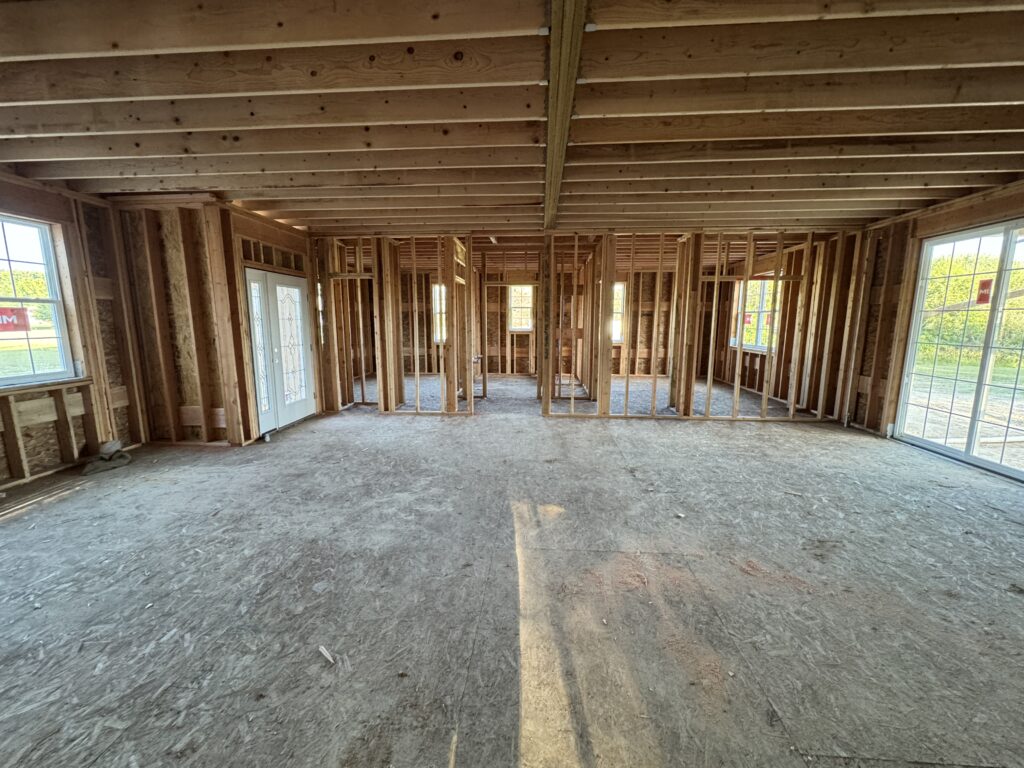
In wood-framed wall construction, king studs and jack studs are essential components that work together to frame openings for doors, windows, and other rough openings while maintaining structural integrity. A king stud is a full-height vertical stud that runs continuously from the bottom plate (sole plate) to the top plate of the wall, positioned immediately adjacent to each side of the rough opening. It acts as the primary anchor point, providing uninterrupted vertical support and serving as the attachment surface for the jack stud and header assembly. King studs bear the full wall load and tie the wall together top to bottom, ensuring overall stability.
A jack stud, also called a trimmer stud, is a shorter stud placed directly beside the king stud. It extends only from the bottom plate up to the underside of the header that spans the opening. The jack stud’s primary role is to support the header by transferring the concentrated load from above the opening down to the foundation. In load-bearing walls, building codes typically require double jack studs on each side for added strength, while non-load-bearing walls may use single jacks. The jack stud is securely nailed or screwed to the king stud with a specified pattern (often 3-4 nails at each end and staggered along the length), creating a composite unit that resists compression and lateral forces.